Duke University School of Law
The information on this page was provided by the law school.
Official Guide to LLM, Master’s, and Certificate Programs
Introduction
 Duke Law School is one of the world’s leading law schools, known for its outstanding faculty and scholarship, a curriculum that integrates professional skills development, and a cross-disciplinary approach to learning and teaching. Students come to Duke Law from every state in the United States and from all over the world; alumni work in top law firms, companies, and NGOs across the globe. One of the reasons students choose Duke Law is its collaborative environment, where growth is encouraged not only through rigorous study but also through cooperation and support. Because the school is small, students enjoy close interactions with faculty and peers. Duke Law’s faculty members are among the most respected experts in fields such as environmental law, health law, international law, intellectual property law, start-up law, constitutional and public law, law and technology, and international business and corporate law. In addition, professors are deeply dedicated to teaching and are accessible and responsive to students. Their open-door policy encourages students to ask questions, continue discussions, and seek advice on specialized interests. Faculty-student interaction extends beyond the classroom to research, pro bono opportunities, career counseling, and mentoring. At Duke Law, students experience a supportive environment where the focus is on training and developing the whole person in an atmosphere that values different perspectives, experiences, and orientations.
Law School Enrollment
 In a typical year, the entering JD class will have 220-240 students and the LLM class will have 80-90 students. With a 6:1 student-to-faculty ratio, our LLMs enjoy individualized attention in the form of assigned faculty advisors, dedicated academic and career counselors, and ample opportunities for personalized engagement.
The University
 Duke University enrolls over 17,000 undergraduate, graduate, and professional students and is regarded as one of America’s leading research universities. Its 10 graduate and professional schools are among the leaders in their fields, and the university’s health system combines clinical care, research, and education. Duke also is active internationally through Duke Kunshan University in China, the Duke-NUS Graduate Medical School in Singapore, and numerous research and education programs across the globe.
Law School Faculty
Central to Duke Law’s success is its faculty. Well respected in their chosen fields, Duke Law professors are known for groundbreaking legal scholarship that impacts public policy and the legal profession. A large number of faculty also are practitioners in both the public and private sectors in the United States and abroad, and bring deep experience from extensive careers in law and business. Faculty members’ backgrounds are as varied as they are distinguished: they are former Fulbright Scholars, Rhodes Scholars, and Marshall Scholars; a number have served as U.S. Supreme Court clerks, many hold joint appointments in departments throughout the university and have obtained PhDs in a wide variety of disciplines. Several visiting professors from other countries teach at Duke Law each year, and many full-time faculty members have extensive international connections.
LLM Program/Areas of Specialization
The International LLM program at Duke Law School is designed to introduce international law graduates to the legal system of the United States and to provide the opportunity to take advanced courses in specialized areas of the law. LLM students are able to select courses from the full JD curriculum, including clinics. They also have access to extracurricular activities such as law journals and pro bono opportuntities. Our goal is to integrate LLM and JD students in the whole life of Duke Law School. Students also may take courses in other parts of the university, such as the Fuqua School of Business or the Sanford School of Public Policy.
Most LLM students at Duke are professionals with two or more years of experience at well-known law firms. They are also judges, prosecutors, academics, or members of government ministries, corporations, or financial institutions. The LLM program usually includes a small number of talented, very recent law graduates as well. Applicants must hold a first degree in law from an accredited institution outside the United States. The law degree should be the equivalent of the JD or LLB degree. As part of its general LLM program, Duke offers certificates in Environmental and Energy Law; Business Law; Intellectual Property, Science and Technology Law; International Law, and New Ventures and Entrepreneurship.
Location
 If you are looking for a comfortable and eclectic American city with great restaurants, abundant entertainment, and easy access to the beach, mountains, and parks, Duke's home of Durham, North Carolina, is the place for you.
The city and surrounding areas have a high concentration of researchers from around the world who work for one of the area’s many universities or high-tech companies. You’ll experience the famous “Southern charm” and hospitality that are unique to this region of the United States. And Durham is ranked as one of the best and most affordable places to live in America.
Duke and Durham host many venues for sports, dining, and entertainment, all at affordable prices. LLM students with families also find Durham and nearby communities to be the ideal place to study, with ample child-care options, high-quality schools, and endless opportunities for family fun and entertainment. Durham's Museum of Life and Science, Chapel Hill's Kidzu, and Raleigh's Marbles Museum, as well as myriad parks, lakes, forests, pools, and sports clubs are some of the many ways families stay entertained in the area. For more information see Family Life at Duke.
Housing
 Choosing a place to live in Durham will be a pleasant process, a nice change from living in a large, crowded city. Off-campus housing options are plentiful near Duke. You can choose from traditional apartment complexes (most come with pools, exercise facilities, and on-site laundry), urban lofts in transformed tobacco warehouses (also loaded with amenities and usually within steps of restaurants, coffee shops, and retail shops), and homes and condominiums for rent.
One of the newest housing options is Lancaster Commons, a university-sponsored apartment complex reserved exclusively for graduate and professional students. Only a few miles from campus, it has a dedicated university shuttle that stops directly across from the Law School.
Many students choose to share an apartment with a classmate; some rent their own place. Whatever your preference, Durham has something to offer.
Student Life
 You will work very hard on your studies as an LLM student at Duke, but you will also find time to enjoy your life in the United States. LLM students always seem to have something to do outside the classroom, whether it's a student-organized football (U.S. soccer) tournament, weekly golf dates at one of Durham's excellent courses, or meeting up with fellow LLM and JD students for Thursday night "Bar Review" — a social event, not a study session! Many LLM students organize weekend or holiday break trips to tourist destinations around the U.S. To hear directly from current and past students, visit The Duke Law LLM Experience.
Activities outside the classroom also provide opportunities to augment your legal studies. International students participate in a wide range of academic extracurricular activities, including moot court teams that travel throughout the U.S. and abroad for competitions. Several academic student organizations host conferences and symposia on timely topics, and a number of LLM students spend spring or fall break each year with JD colleagues, providing pro bono legal services to underserved and underrepresented populations.
Career Services
Duke Law is committed to helping LLM students acquire the professional tools and skills that will serve them well in the United States or abroad, starting with attorney-counselors dedicated to meeting the needs of our LLM students. The counselors are available to meet with LLM students one-on-one to discuss career planning and job search techniques, including everything from advice on resume writing to in-depth conversations about career choices.
In addition to the professional development programs that are offered to JD students, which LLM students are welcome to attend, we organize a variety of programs exclusively for LLM students to assist them in identifying and pursuing their goals. Some of the programs offered each year specifically for LLM students include the following:
- Panel discussion with LLM alumni on finding jobs in the U.S.
- Resume and cover letter workshops
- 1:1 practice interview program
- International Student Interview Program (ISIP) in New York
- Networking Receptions with US and JD Alumni in New York and Washington
- 1:1 sessions with an executive career coach
- LLM Alumni Spotlight Series
Summer Programs
 Duke Law School is pleased to offer two summer programs available to international students;
The Summer Institute on Law, Language, & Culture (SILLC) both prepares students for LLM studies and offers a standalone introduction to U.S. law and legal vocabulary. This four-week intensive program takes place at Duke Law School. It includes lectures covering many aspects of U.S. law, small group discussions about U.S. legal issues and culture, simulated trials and contract negotiations, and instruction in U.S. legal writing and oral advocacy. In their free time, SILLC students enjoy the activities of summer in Durham, combined with opportunities to share meals with Duke Law faculty members, including dinner at an instructor’s home.
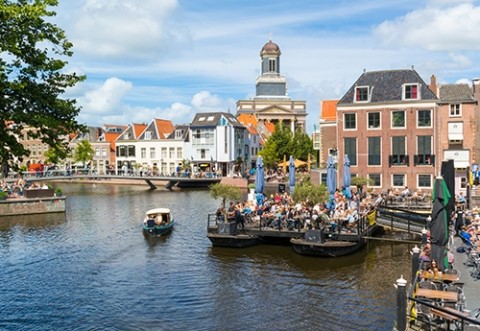
The Duke-Leiden Institute in Global and Transnational Law is a one-month residential program in The Hague, the Netherlands, designed for students and young professionals interested in studying international and comparative law. The Institute, which takes place over four weeks in June and July, also provides an excellent foundation for studying law in the United States. Courses are taught in English by faculty from the U.S. and from other countries. In previous years, courses have focused on subjects such as international trade, international dispute resolution, human rights, international criminal law, and comparative constitutional law. The Institute enrolls approximately 50 students from Duke and other U.S. law schools, as well as from countries around the world.
Application
Admission to the LLM is highly competitive and is based on the following criteria:
- the applicant’s academic promise as revealed by previous academic performance;
- references (a minimum of two) that demonstrate the applicant’s scholarly ability and professional qualifications;
- the applicant’s professional plans, goals, and special interests as reflected on the personal statement and resume; and
- the applicant’s English language proficiency.
Contact Information
For additional information about this program, please visit the Duke Law School International Studies website, or contact:
Duke Law School
Office of International Studies
210 Science Drive
Box 90365
Durham, NC 27708-0365
USA
Phone: 919.613.7033
Fax: 919.681.6550
Email: international@law.duke.edu
