580 Massie Road, Charlottesville, VA 22903-1738, USA
Phone: 434.924.7351 | Website: www.law.virginia.edu
Introduction
Founded by Thomas Jefferson in 1819, the University of Virginia School of Law is a world-renowned
training ground for distinguished lawyers and public servants. The Law School is widely recognized as
one of the nation's best, and its graduates are prominent in the leadership of the bar, legal education,
and public service both in the United States and abroad. Virginia has educated generations of lawyers, instilling in them a
commitment to the ideals of leadership, integrity, and community service. Faculty members, nationally
acclaimed experts in their fields and outstanding teachers, lead Virginia's 1,100 students to appreciate
the power of law to shape human behavior and to influence political, social, and cultural life.
Virginia is justly famous for its collegial environment that bonds students and faculty, and student
satisfaction is consistently cited as among the highest in American law schools. Intellectual challenges
are met with a spirit of cooperation and camaraderie. Students learn together and rely on the nation's
oldest student‐run Honor System to maintain the highest ethical standards.
Since the 1960s, the Law School's Graduate Studies program has provided an American legal education
to lawyers who have obtained their first law degree in their home countries. Superbly talented
individuals with wide‐ranging interests and experiences, Virginia's LLM students make important
contributions in and out of the Law School classroom. By maintaining a small and highly selective
program, the Law School ensures a supportive atmosphere for students. In a typical year, several dozen
students, all holders of the academic degree regarded as their country's first professional degree in law
(equivalent to the US juris doctor degree), are admitted to the one-year program leading to the Master of Laws
(LLM) degree. Virtually all members of the LLM class are from abroad. The Law School also offers the
Doctor of Juridical Science degree (SJD), the highest degree in law.
For foreign law graduates, the LLM program is designed to provide both a broad introduction to
American law and legal theory, and advanced training in specialized areas of the law that are relevant to
the individual student's planned career in private practice, academics, or public service.
The advantages of maintaining a small graduate program in a large, intellectually diversified law school
include the ability to tailor each student's course of study to his or her individual interests and career
objectives. The chair of the Graduate Studies Committee advises students and approves their course
selections and research plans and, together with other faculty members, is available to counsel students
as they progress through the program. With the approval of the chair, LLM candidates may also take up
to three of their required credit hours in relevant graduate‐level courses in other schools and
departments of the University. In appropriate cases, the Graduate Studies Committee may permit
additional credit hours to be earned outside the Law School.
Law School Enrollment
The law school has a total enrollment of 1,100 full-time students.
Physical Facilities
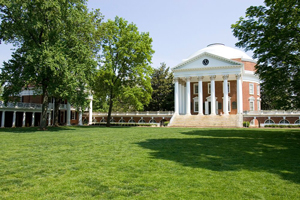
At Virginia, your legal studies will take place in what is perhaps the most appealing physical environment
found at any law school in the country. The David A. Harrison III Law Grounds reflect a recent $46-million
expansion and renovation project funded entirely by private support from alumni and friends.
Surrounded by inviting gardens and an elegant, tree-lined lawn, the setting reflects Jefferson's
conviction that locating an intellectual community within a beautiful environment fosters learning and
personal growth.
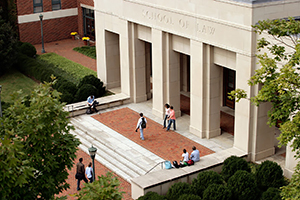
The Law Grounds feature new classrooms, seminar rooms, and moot courtrooms; comprehensive
computer facilities; an expanded library with a three-story reading room; new dining facilities; attractive
offices for student organizations; and numerous student lounges.
Nestled in the foothills of the Blue Ridge Mountains two hours southwest of Washington, DC, the city
of Charlottesville is cosmopolitan and relaxed. A picturesque and thriving metropolitan area of more
than 135,000, Charlottesville has kept its small-town feeling. Area restaurants are featured in
publications such as Gourmet magazine and The New York Times, and an impressive array of local
wineries offer award-winning vintages.
Cultural opportunities abound. Theater, opera, and music are community fixtures. Jefferson's Monticello
and the nearby homes of James Madison and James Monroe feature classic architecture and rich
history. Each fall the University hosts the nationally acclaimed Virginia Film Festival and in the spring
gathers the nation's literary luminaries for the Virginia Festival of the Book.
Law students seeking a community in which they can relax, find plentiful entertainment, and appreciate
abundant natural beauty to balance the intense rigors of law study will find a home in Charlottesville.
Housing
Although the University of Virginia provides some graduate housing, space is limited and many Law
School students choose to live off-grounds. We have established a special site for Law & Darden Off-Grounds Housing, where you can search for housing by area, rent
amount, and number of bedrooms, as well as use the message boards to find roommates and buy/sell
furniture. The University's Student Council sponsors the Off-Grounds Housing Office, which also offers
rental listings and a message board for users.
LLM Programs/Areas of Specialization
Applicants must have received the academic degree regarded as their countries' first professional
degree in law (equivalent to the US juris doctor degree).
Virginia offers more than 200 courses and seminars each year, most of which are open to LLM
students. Students pursuing interdisciplinary ideas benefit from an environment where nearly half of all
law faculty also hold advanced degrees in fields such as psychology, economics, philosophy, history,
medicine, and theology. Outside the classroom, students plan and program many of the conferences,
lectures, and panels that enrich the school's intellectual life.
Graduate students are encouraged to immerse themselves in the intellectual life of the Law School and
will generally be enrolled in courses and seminars with upper-level JD students to encourage the
exchange of viewpoints influenced by different cultural and life experiences. Elective courses include
interdisciplinary offerings such as law and economics, law and social science, and law and medicine.
Elective classes might be as small as 10 students or as large as 100.
A full-time faculty of about 80 teaches the vast majority of offerings, but the Law School is also proud of
a roster of more than 100 adjunct faculty members or part‐time instructors, many from major East Coast
and local law firms who teach in specialty areas. Over 15 visiting faculty from the United States and
abroad supplement the school's offerings with short and semester‐long courses.
Incoming LLM students who score below a certain score on the English assessment test given during
orientation week are required to take Graduate Legal Research and Writing. All LLM students have to
satisfy the writing requirement (a substantial research paper). Beyond these requirements, students are
invited to be creative in selecting courses and research topics. For example, students wishing to
specialize in international human rights may register for the basic course and seminars offered in that
area. But such students would enrich their understanding by sampling from the variety of courses that
explore legal approaches to similar issues in an American context, including courses dealing with civil
rights, employment discrimination, and immigration law. Similarly, students planning a law practice in
international business transactions may choose from a menu that includes foundational courses in
American corporate, commercial, and regulatory law, as well as courses with an explicit focus on
international business, trade, and litigation. This process can be repeated for virtually every other field of
legal study that demonstrates the Law School's commitment to intellectual diversity and individualized
courses of study.
Application Information
- Applications available: August 15
- Application deadline: February 1
- Application fee: $80
- Letters of recommendation: Two (2) required
- Transcripts required for applicants with foreign law degree: LSAC LLM Credential AssemblyService strongly preferred
- Approximately 40 students participate in the program each year
- Tuition and fees: approximately $49,600
Applicants must submit the following materials in support of their application:
- Application Form: We require applicants to complete and submit an electronic application with required attachments
through the Law School Admission Council (LSAC). Applicants should take particular care in outlining and
discussing their reasons for wanting to pursue graduate work, including a statement of future
professional plans. Applicants should also describe their principal areas of interest, with as much
specificity as possible.
If you are applying for financial aid, you must complete the Supplemental Aid Form at the LSAC
application site. Please note that we only offer financial assistance to applicants who apply for aid. - Official Transcripts: Applicants must submit transcripts and proof of degree documents (if proof of degree does not appear
on the transcript) from all prior colleges, law schools, exchange programs, or graduate schools attended,
even if the applicant did not graduate. Transcripts must be in English or accompanied by a certified
English translation.
Applicants accepted for the LLM program who are currently in their last year of schooling for the first
degree in law will be asked to provide additional final transcripts and proof of degree upon graduation.
We reserve the right to ask for further verification or authentication of documents. - LSAC LLM Credential Assembly Service: LSAC offers a credential assembly service for LLM program
applicants. Virginia Law strongly recommends, but does not require, that international applicants to
the LLM or SJD program utilize LSAC's LLM Credential Assembly Service.
Note that the LSAC LLM Credential Assembly Service is separate and distinct from the LSAC electronic
application. We require the LSAC electronic application. We recommend but do not require the LSAC
LLM Credential Assembly Service.
The University of Virginia School of Law does not participate in the Service Fee Reduction Request
feature of the LSAC LLM Credential Assembly Service. Therefore, do not submit materials related to a
request for a reduction of this LSAC fee to the School of Law. - Letters of Recommendation: The Law School requires at least two letters from people who know the applicant well and are in a
position to evaluate his or her capacity for advanced legal study. Letters from family members, friends,
or people who are not well acquainted with the applicant are not helpful and should not be submitted.
- Application Fee: The application fee is $80 USD and must be paid online with a credit card. The Law School does not
waive application fees for graduate programs.
- TOEFL Score: International applicants are required to demonstrate proficiency in English by completing the Test of
English as a Foreign Language (TOEFL) within two years prior to submitting the application.
The Graduate Committee will accept a score from the International English Language Testing System
(IELTS) in lieu of a TOEFL score. Applicants should be aware that competency in English is critical to
success in the graduate law programs at the University of Virginia, and that demonstrated fluency in
English is an important consideration in evaluating applications. - Deadlines: Applications, including all supporting materials, must be received by February 1.
Importance of Full Disclosure
Falsification of information in an application for Graduate Studies or failure to provide complete
responses to requests for information, including information concerning financial aid status, will be a
basis for exclusion from the Law School. In addition, either could result in disciplinary action by bar
authorities or loss of legal resident status for noncitizen students. Applicants have a continued duty to
disclose even after they have submitted their applications. Students planning to take a bar exam should
familiarize themselves with the rules for admission to the bar of the state in which they intend to seek
admission, especially those rules relating to character, fitness, and other qualifications for practice.
The Law School receives hundreds of applications for the 45 places in its LLM class. The admissions
process is highly competitive and the Graduate Committee must, unfortunately, disappoint many
qualified applicants. Although demonstrated excellence in prior law study is essential, the committee
places equal emphasis on other evidence of applicants' personality, accomplishments, and potential for
professional achievement as revealed through letters of recommendation, extracurricular activities,
personal interests, and prior legal (or law-related) experience. The principal criterion for admission,
however, is the closeness of the fit between the applicants' professional interests and the Law School's
resources. Accordingly, the committee places special weight on applicants' stated reasons for wanting to
pursue graduate legal studies, and their principal intellectual interests and career plans.
Contact Information
For additional information, please visit the Graduate Studies website, or contact:
Office of Graduate Studies, University of Virginia School of Law
580 Massie Road
Charlottesville, VA 22903
USA
Phone: 434.924.3154
Fax: 434.982.6682
E-mail: gradadmitlaw@virginia.edu
Student Services and Organizations
The University of Virginia School of Law is enriched by the scope of student organizations,
extracurricular activities, and the community spirit that permeates student life. Opportunities include 10
academic journals, 70 interest-centered organizations, student governance (both Law School and
University), and a vibrant range of social and athletic activities. In addition, the University and local
community are both large enough to offer something to meet anyone's interests and small enough to
make active participation compatible with a student's rigorous academic schedule.
Graduate students are encouraged to participate in the many student organizations at the Law School.
In addition, the Graduate Law Student's Association, comprised of LLM and SJD candidates, sponsors
social activities and helps foster a sense of community here at the Law School.
Virginia values its reputation as a school that produces graduates who are skilled in law and balanced in
life. It encourages students to enjoy their legal studies, to expand intellectually and personally, and to join
the thousands of successful alumni who recall their law school years with warmth and enthusiasm. LLM
graduates carry on the Virginia tradition through active overseas alumni associations.
Career Services
The Office of Graduate Studies works closely with individual graduate students to craft a job search
strategy specific to each student's unique background and interests. The Graduate Studies Office and
the Office of Career Services and Mortimer M. Caplin Public Service Center work together to provide
graduate law students with the highest level of service.
Persons who come to the United States on a student visa are not permitted to seek permanent
employment in the United States. LLM graduates may, however, seek permission to remain in the
United States for a limited period of "practical training" following graduation. Students should be aware
that securing such positions can be challenging and will require significant effort on their parts. The Law
School offers assistance to foreign students in their searches for practical training internships with
leading international law firms. We also participate annually in the Overseas-Trained LLM Student Interview Program
coordinated each year by the Columbia University School of Law and co-sponsored by the University of
Virginia School of Law, the University of Chicago School of Law,
Harvard Law School, the University of Michigan Law School, Stanford University Law School, and Yale Law School.
« Back to LLM/Graduate Law Program Guide