
Kevin Washburn: “A Native American Who Walks in Two Worlds”
By Noah Austin
It’s often said that Native Americans “walk in two worlds” while balancing tribal customs and beliefs with the modern realities of non-Native life. For Kevin Washburn, a citizen of Oklahoma’s Chickasaw Nation, the saying rings true in an additional way. “I’m a Native American who walks in two worlds: government and academia,” he jokes.
November is Native American Heritage Month, which celebrates Indigenous communities and the threads they’ve added to the American fabric. Those threads can now be found throughout the U.S. legal system, from Indigenous lawyers such as Washburn to court practices rooted in tribal traditions. And Washburn — now a professor at the University of California, Berkeley School of Law — has watched that evolution over his 33 years in law and legal education.
He’s seen it from many angles, too. Before arriving at UC Berkeley Law, he served as dean of the law schools at the University of New Mexico and the University of Iowa; earlier in his career, he was assistant secretary of Indian affairs during the Obama administration. He’s also worked as a federal prosecutor, the general counsel of the National Indian Gaming Commission, and a U.S. Department of Justice attorney. And he’s been the chair of LSAC’s Board of Trustees and a member of the American Bar Association Accreditation Committee, among other posts.
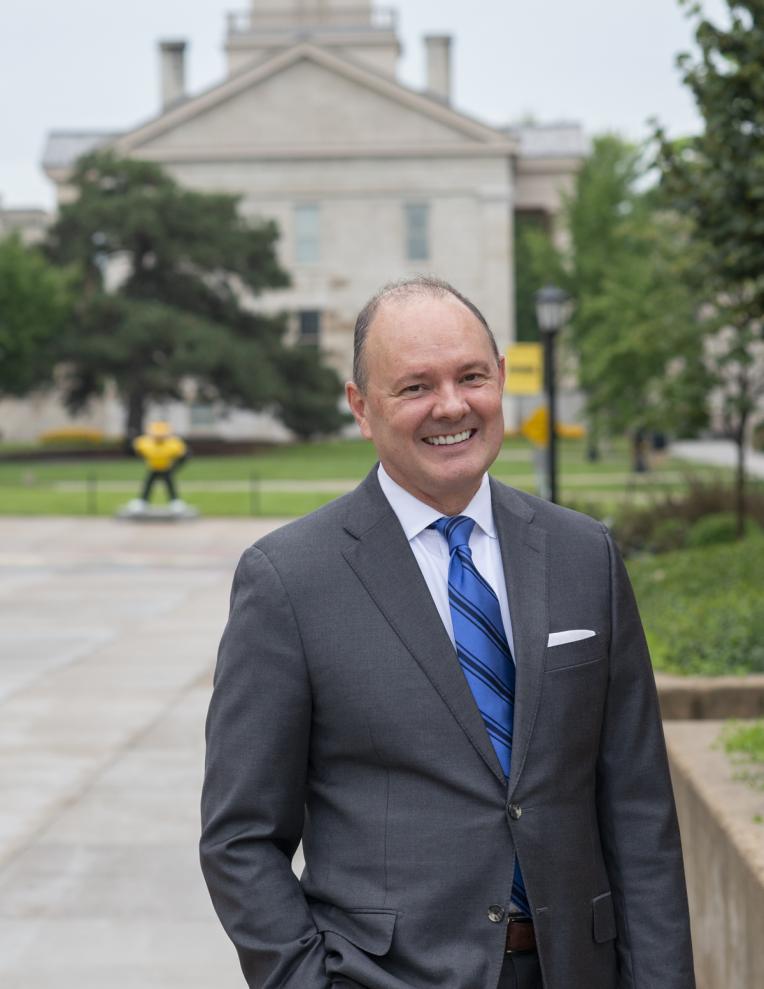
It’s an impressive résumé, and the path to it started early: Like roughly one in six incoming 1Ls, Washburn started thinking about being a lawyer when he was in elementary school, as one of three kids being raised by a single mother in Oklahoma. “There was a gentleman she dated for a while who was a lawyer,” he recalls. “Everybody was so impressed by him, and I was, too. ... I think it was the legitimacy that comes with being a lawyer.”
There were other inspirations, too, including a state bar president Washburn met in college and a good friend who was pursuing a law degree. But the LSAT, Washburn says, was what truly set him on the path. “It changed my life,” he says. “It pulled me out of the crowd and made me visible as someone who was bright and could succeed.” The test, he adds, “can rescue people. It can make them visible in a way they wouldn’t be otherwise.”
That visibility led to recruitment letters before he’d even applied to law school, along with scholarship offers that meant he wouldn’t have to work while studying — first at Washington University School of Law in St. Louis, then at Yale Law School. At both institutions, he was the only Native in his class. “It was a little lonely sometimes,” he admits.
It didn’t help that it seemed like many people already had a plan for him. “If you go to law school and you’re Native American, you are likely to be asked: ‘When you graduate, are you going to help your people?’” he recalls. “And honestly, I resented it a little bit at first. But it ultimately gave me a path ... and a purpose.”
Even today, Natives in law school remain relatively uncommon — of the racial and ethnic groups broken out in LSAC surveys, the percentage of 1Ls identifying as American Indian or Alaska Native is consistently among the smallest. But Washburn says things have improved since he was a 1L.
“There is much better representation,” he says. “The ‘n’ is still pretty small, but some schools are really focused on Indigenous law and Native Americans, so that ‘n’ is not quite as scattered as it once was — it’s bunched at certain schools.”
Many of those schools, he adds, have committed to attracting Native law students through scholarships or offering in-state tuition to members of tribes in other states. “There are some schools that are really taking up the mantle,” he says — among them the law schools at Harvard, Yale, UCLA, UC Berkeley and Arizona State. At these schools and others, he says, “there are enough people to form a community, and that really helps a lot.”
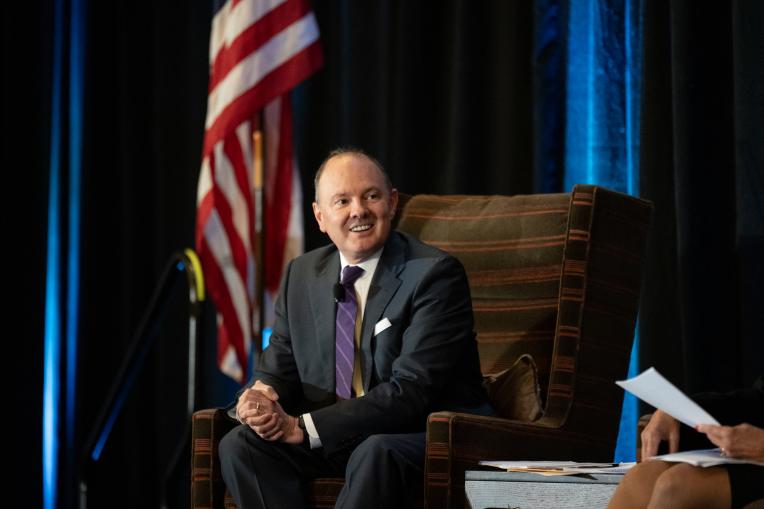
Those cohorts have led to more practicing Native lawyers, who’ve become particularly vital as tribes navigate complex legal issues such as water rights and gaming compacts. And recent results at the U.S. Supreme Court speak to that importance. “We’ve had 20 decisions out of the Supreme Court in the past 10 years,” Washburn says, “and tribes have won about 14 or 15 of those cases. ... That’s just a reflection of having better infrastructure around legal issues.”
Additionally, a better grasp of the U.S. legal system has helped Natives, in just the past 60 years or so, develop a robust system of tribal courts that incorporate traditional practices. American courts have even borrowed some of those practices — particularly those aimed at keeping a community cohesive and helping people get on a path to recovery, rather than incarceration. “Tribes have been resolving disputes since long before the U.S. court system was developed,” Washburn says.
But there’s still work to be done when it comes to making the legal system work as well for Native Americans as is does for the U.S. as a whole — and that gap has been a focus of Washburn’s scholarly work. (As it turned out, he did end up working to help his people.) He notes that it required a 15-year effort to start building a federal courthouse in Flagstaff, Arizona, where he now lives. That building is slated for completion next year; until then, residents of Arizona’s portion of the Navajo Nation, which neighbors Flagstaff, must continue driving hundreds of miles south to Prescott or Phoenix for federal court proceedings.
“The status quo is just not right,” Washburn says. “It’s not consistent with our American values about how justice is supposed to be done. The community is supposed to be represented through the jury, but we remove these cases from the community. ... So, my Native perspective has helped me to see what’s wrong with criminal justice on Indian reservations.”
Washburn continues to work on Native issues, but he says he’s also happy to be back in the classroom. “It’s just really rewarding, and it keeps me young,” he says. He’s had the opportunity to teach Native students who have kept in touch and even collaborated with him. “If they’re not working for one tribe, they might be working for the tribe next door and they know who the attorney is for that tribe,” he says. “Even though I’ve moved around a lot, I bump into them frequently in my work.”
Native Americans, he adds, bring a unique and valuable voice to the legal system. “I’m an American, I grew up as an Oklahoman, and I’m Chickasaw,” he says. “So, there’s a third perspective I have that other people don’t have, and it’s a good perspective. It’s allowed us to survive a lot, including landing in Oklahoma, which was not our original home — we were removed there.”
When he goes from one law school to another, Washburn says, he tries to impart that Native perspective while also being open to others’ views. “You learn that there’s more than one way of doing things that might be successful,” he says. “And I think the world has found that the tribes have good ways of doing things, too.”